Live from Kenya! Update from Monty
January 6, 2010 by AnnieLaurie
Filed under Blog, Clean Water, Eburru, Food, Kibera, Orphans
“Only one life, twill soon be past; only what’s done for Christ will last. Don’t waste it”
I have seen so many things over the past week, I am on sensory overload. We started at Kibera slum where somewhere between 1 and 3 million people live. I saw things that will be burned in my memory forever. We walked in initially and it was a lot of mud huts. As we got further in, we were on a hill overlooking miles of tin roofs on top of huts for as far as you could see.
I watched a lady wash fresh greens in dirty red water that she had scooped out of the run-off ditch, which was full of trash and waste. It represented so many wrong things on so many levels. It was filthy squalor and it was filled with millions. And growing. It is easy to see the natural progression of an unhealthy life in Kibera that leads to illness, crime, or prostitution. It would take an army of people and perhaps a half a century to turn a place that size around. When you think about healthcare, education, clean water, infrastructure- it is still very hard to wrap my mind around how and where you would start.
We were invited to visit a women’s group meeting. It’s strange that I haven’t seen a lot of men here, I don’t know where they all are. Anyway, the women sang some of the most beautiful songs. I couldn’t understand a lick of what they were saying but felt so honored that they allowed us to sit in and listen to them sing praise music to God. For me it was a bonding moment with these women. I feel like they let us in on something personal to them, yet I knew that they were singing to the same God that I have learned about my whole life. It is amazing to me that I can travel to the other side of the world and listen to people, who are suffering more than I will ever know in my lifetime, praise the same God that I learned about in my Sunday school classes as a little girl. These are women who told me from their own mouths that they do not know where their next meal will come from. Women who are experiencing shame and embarrassment for being poor, who don’t want their community to know that they are suffering and need food. They have the same feelings of pride and shame that I would have if I were in their place. It was such a comfort to see them bond in their group and praise the same God I have learned about my whole life, it was like we had a great old friend in common and that made my heart warm and peaceful.
On Jan 1 we participated in community day and did several feedings. Hundreds showed up. I cannot think of a better way to spend the first day of a new year. The community showed up and participated in running races, where I saw several women TAKE OFF their shoes before they ran. Welcome to Kenya. Even the old old men with canes participated in running races.
When it was time for the feedings, the food didn’t look like enough to cover the whole crowd, and culture demands that children eat last. We said a quick prayer for the food to last. The men, women, and children were divided into groups.
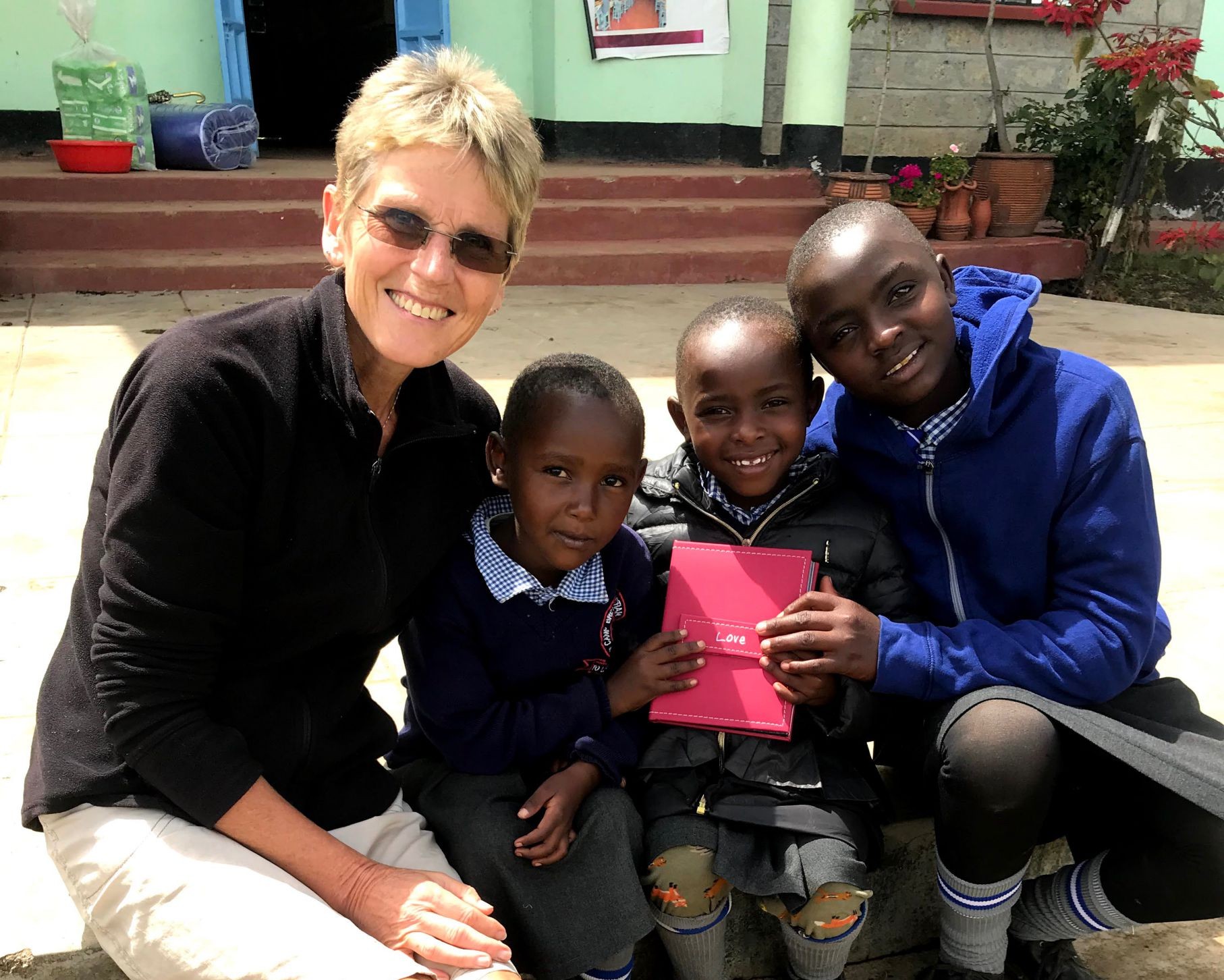
I had an opportunity to serve the children and gosh they were so hungry. We served them white rice and they were desperate and pushing in line to get to it. They had no plates so we served rice into their hands. Sometimes it was too hot and they would drop it, which really hurt my heart. Half way through they came up with their shirts cupped so we could put the rice in there. Filthy clothes used as plates. What we would discard and throw away is what their little bodies were desperate to get. I’ve played with several kids for days and thought they were three or four years old. I found out yesterday that one of them, who is smaller than my 3 ½ year old niece , is seven years old. I guess this is how the lack of proper nutrition affects your physical development, especially when your main source of intake is rice.
We fed them again at their graduation ceremony. This time they were able to benefit and eat the meat of the bull we bought and slaughtered when we arrived. You know I did NOT watch nor was I anywhere close by. However, one of the locals commented that he was shocked that we did not kill in the yard. One of the girls on my team replied, “I live in an apartment complex.” Cracked me up.
While worlds and miles apart, the good work that God is doing for these suffering people has connected us all. It is my prayer that the children and families of Eburru realize that we are loving them the same way that God loves all of us, 1 John 4:11 says “since God loved us, we also ought to love one another.” And Psalm 9:18 says “the needy will not be forgotten.”
Lastly, I would like to offer some explanation to my purpose here. I believe that God has commanded us to help e and love each other. Matthew 25:40 says “whatever you did for the least of one of my brothers, you did for me.” I also believe that what we do in faith, God will see through. Philippians 1:6 says that “he who started a good work in you will bring it to completion.” While our time here is limited, I can rest easy knowing that God will finish what has been started here and according to Romans 8:28, he “works for the good of those who love him.”
Live From Kenya Part 5 - Solvable Problems
June 29, 2009 by AnnieLaurie
Filed under Blog, Clean Water, Eburru, Education, Financial Support, Food, Fund Raising, Health Care, Health Care, Kenya, Kibera, Microfinance, Morgan House, Orphans, Pastor Steve, Poverty
Friends of David’s Hope,
As I try to sum up what I’ve seen, smelled, tasted and touched in the past two weeks here in Eburru, words fall short of describing the desperation of the situation here. The livelihoods of all living in this town and surrounding area are perilous, and if conditions do not improve, death is certain for many. The culprits? Drought, Isolation and Famine.
Those who have read my previous posts know drought and famine are ravaging Eburru, Kenya. It has rained twice here between January and May, a time frame known as the ‘rainy season’, yet yielding little to no rain at all this season. This unusual and unseasonal lack of rain is causing crops to fail - a death wish for a town dependent on agricultural production for life. While the rains have teased us occasionally this month, and the color green has started to crop up in the fields, looks are deceiving. Eburru is just about to enter a harsh three or four month period of no consumable or sellable food while the corn, potato and wheat fields move through their growth cycles, assuming the rains continue. Let pray together that God will bring the rain to Eburru, a dry and weary land where there is no water.
ECOLOGICAL ROOTS OF FAMINE IN EBURRU
It’s no question that the entire world is experiencing the impact of the current global economic crisis, particularly as it related to the cost of food. For Eburru, the current circumstances go much deeper then the global economic crisis, spike in food prices and civil unrest after Kenya’s most recent elections. The complications in Eburru are rooted in its own climate and unique ecological conditions.
You see, Eburru is located near the equator on a dormant volcano, where temperatures regularly climb into triple digits and steam is naturally released up from the ground. Crops need extra water as the sun bakes from above and the steam dries from below, sucking the soil dry and making the crops much more susceptible to drought and failure. You can see how important the rainy season is and how drought can have double the negative impact in conditions like these.
In a typical year with a rainy season, the months of July through September are the driest and food the most scarce. This year as Eburru moves into the dry season, there was no rainy season to build up reservoirs of water. When combined with skyrocketing food prices, the people are entering a catastrophic situation. Not only can they not feed themselves, they have no crops to sell, meaning no income for these agriculturally based families who already live on less than $2.00US a day.
In a town like Eburru, where survival is the goal, when money is scarce priorities change.
To illustrate, I ran into a pack of kids on Friday who were playing outside. I asked why they were not in school and they said Friday was exam day, which means a supplementary fee to pay for the paper exam. Cost: 30 Shillings or about $0.25 US. Well, they didn’t have the money so school wasn’t an option that day. And these are the children actually in school. But when forced to choose between an education and food, you can guess which option the parents choose.
ISOLATION BREEDS DESPERATION
To make matters worse, Eburru is relatively isolated and very difficult to get to. Located high in the mountains at 8,000 feet above sea level, Eburru is accessible only by dirt roads so filled with potholes, dips and dives, that every time Pastor Steve drives to Eburru he has to get his vehicle serviced. “On the road to Eburru, you don’t drive on the right or left side. You drive where there are no potholes,” he says. Obviously, this remote village is not a preferred destination for educated professionals, entrepreneurs, or general service providers. There is no running water, no plumbing, no electricity, no trash removal, and you get the idea. Schools are overcrowded, health care is practically non-existent and civil organization is challenged regularly because teachers, doctors and lawyers just don’t come to this mountainous dust bowl deep in the African bush.
Eburru’s challenges don’t end with location. The town is sandwiched between Masai tribal lands southeast stretching down to the Masai Mara safari game parks and huge East African flower plantations roughly to the north. The colorful Masai warriors are one of Kenya’s most enduring tourist symbols and thus protected when the going gets tough. The flower farms around Lake Naivasha, while hardly paying a large wage to its workers; do employ tens of thousands of people, powering a decent economy. Eburru, stuck in the middle, might as well be located on Mars. No one knows, recognizes or cares about the situation unfolding in Eburru. The town is abandoned, as are its inhabitants, left with little hope for survival. If something doesn’t change in Eburru over the next few months, men, women and children will die. Not sure I can say this any clearer.
DEATH BY MALNUTRITION AND FAMINE

Seeing this situation unfold before my eyes is indescribable. Children are stick thin, bloated with malnutrition, and their brains are deteriorating. And “these are the ones you can actually see because they can still move around,” said Pastor Steve’s wife, Mary, a medical professional. Ironically, one of the final stages of death by malnutrition is loss of appetite. I’m told you just stop functioning and give up, lying on the ground, blank stare, until death and burial.
Making the situation even more real, I found out the other day David’s (of David’s Hope) 8-year old sister died in 2004 of severe malnutrition. When Pastor Steve and Mary learned of the situation, they rushed the young girl to the hospital in Kijabe, but it was too late. The other day I walked by her gravestone next to the family mud hut, phew. Remember my blog post about David a few days ago? I believe he was not far from the withdrawal stage of malnutrition when we fed him last week. David and his 12-year old cousin, Mary, are now set up for a daily meal at Pastor Steve’s preschool facility and medical clinic.
CREATING A SELF-SUSTAINABLE MINISTRY
As I try to process all that’s happening around me I can’t help but ask God: “So what next?” Go home back and cry? Not an option. Live full-time in Kenya? Nope, they don’t need me here. They need prayer, resources and sharp business assistance.
The next step for David’s Hope is clear. After spending the last two weeks with Pastor Steve and his colleagues, we know exactly what’s needed to turn things around in Eburru and its time to mobilize the troops. With your help, we will power the growth of Pastor Steve’s ministry in a self-sustainable way.
Pastor Steve has a big (yet realistic) vision to create an economic engine that finances a drastic expansion of his ministry serving the physical, spiritual and emotional needs of orphaned and destitute children. The plan will build upon his current ministry, which includes two churches, medical clinic, maternity ward, preschool, pastoral training program and feeding program.
The epicenter of his plan is the 10-acre Morgan House property. After two years of uncertainty, the title of this abandoned British farm house was officially transferred to his Pastor Steve’s name in May. Now his vision calls for a business, orphanage, preschool, school (K-8), vocational training and feeding program on the grounds of Morgan House. Pastor Steve’s plan has been in motion (and obviously blessed) for about six years now. It just needs a big boost. The timing could not be more right as Eburru fights for survival.
I’ll be writing a lot more about the business side of Pastor Steve’s ministry this week. Really exciting stuff. Stay tuned.
Thanks for reading.