Live from Kenya! Update from Monty

January 6, 2010 by AnnieLaurie  
Filed under Blog, Clean Water, Eburru, Food, Kibera, News, Orphans

“Only one life, twill soon be past; only what’s done for Christ will last. Don’t waste it”

I have seen so many things over the past week, I am on sensory overload. We started at Kibera slum where somewhere between 1 and 3 million people live. I saw things that will be burned in my memory forever. We walked in initially and it was a lot of mud huts. As we got further in, we were on a hill overlooking miles of tin roofs on top of huts for as far as you could see.

I watched a lady wash fresh greens in dirty red water that she had scooped out of the run-off ditch, which was full of trash and waste. It represented so many wrong things on so many levels. It was filthy squalor and it was filled with millions. And growing. It is easy to see the natural progression of an unhealthy life in Kibera that leads to illness, crime, or prostitution. It would take an army of people and perhaps a half a century to turn a place that size around. When you think about healthcare, education, clean water, infrastructure- it is still very hard to wrap my mind around how and where you would start.

We were invited to visit a women’s group meeting. It’s strange that I haven’t seen a lot of men here, I don’t know where they all are. Anyway, the women sang some of the most beautiful songs. I couldn’t understand a lick of what they were saying but felt so honored that they allowed us to sit in and listen to them sing praise music to God. For me it was a bonding moment with these women. I feel like they let us in on something personal to them, yet I knew that they were singing to the same God that I have learned about my whole life. It is amazing to me that I can travel to the other side of the world and listen to people, who are suffering more than I will ever know in my lifetime, praise the same God that I learned about in my Sunday school classes as a little girl. These are women who told me from their own mouths that they do not know where their next meal will come from. Women who are experiencing shame and embarrassment for being poor, who don’t want their community to know that they are suffering and need food. They have the same feelings of pride and shame that I would have if I were in their place. It was such a comfort to see them bond in their group and praise the same God I have learned about my whole life, it was like we had a great old friend in common and that made my heart warm and peaceful.

On Jan 1 we participated in community day and did several feedings. Hundreds showed up. I cannot think of a better way to spend the first day of a new year. The community showed up and participated in running races, where I saw several women TAKE OFF their shoes before they ran. Welcome to Kenya. Even the old old men with canes participated in running races.

When it was time for the feedings, the food didn’t look like enough to cover the whole crowd, and culture demands that children eat last. We said a quick prayer for the food to last. The men, women, and children were divided into groups.

I had an opportunity to serve the children and gosh they were so hungry. We served them white rice and they were desperate and pushing in line to get to it. They had no plates so we served rice into their hands. Sometimes it was too hot and they would drop it, which really hurt my heart. Half way through they came up with their shirts cupped so we could put the rice in there. Filthy clothes used as plates. What we would discard and throw away is what their little bodies were desperate to get. I’ve played with several kids for days and thought they were three or four years old. I found out yesterday that one of them, who is smaller than my 3 ½ year old niece , is seven years old. I guess this is how the lack of proper nutrition affects your physical development, especially when your main source of intake is rice.

We fed them again at their graduation ceremony. This time they were able to benefit and eat the meat of the bull we bought and slaughtered when we arrived. You know I did NOT watch nor was I anywhere close by. However, one of the locals commented that he was shocked that we did not kill in the yard. One of the girls on my team replied, “I live in an apartment complex.” Cracked me up.

While worlds and miles apart, the good work that God is doing for these suffering people has connected us all. It is my prayer that the children and families of Eburru realize that we are loving them the same way that God loves all of us, 1 John 4:11 says “since God loved us, we also ought to love one another.” And Psalm 9:18 says “the needy will not be forgotten.”

Lastly, I would like to offer some explanation to my purpose here. I believe that God has commanded us to help e and love each other. Matthew 25:40 says “whatever you did for the least of one of my brothers, you did for me.” I also believe that what we do in faith, God will see through. Philippians 1:6 says that “he who started a good work in you will bring it to completion.” While our time here is limited, I can rest easy knowing that God will finish what has been started here and according to Romans 8:28, he “works for the good of those who love him.”

  • Share/Bookmark

Give the Gift of Hope this Christmas

December 2, 2009 by AnnieLaurie  
Filed under Blog, News

dhi-giftcat-featureThe first annual David’s Hope International gift catalog is now available online.

Click here to browse the different options available for you to give the gift of hope to children in poverty.

Click the DONATE button to make a secure, tax-deductible online contribution.

Thank you and Merry Christmas!

  • Share/Bookmark

15 Dollars Goes a Long Way in Eburru

Now that Jeff is back from Kenya, with new videos and photos from Eburru.

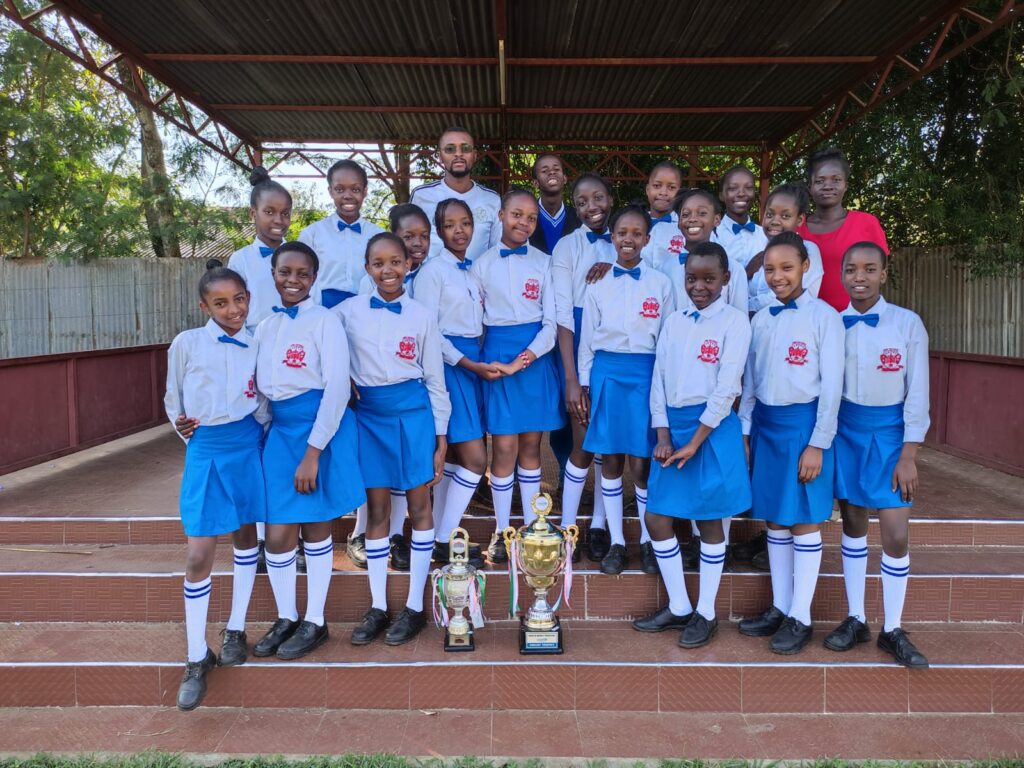
This video shows, at a very high level excatly whats going on in Eburru, a few interviews with the in country ministry directors, Pastor Steve and his brother Jonathan, as well as some clips of the property we are attempting to finance that will be converted into a community care center, with the long term vision of having schools, dorms, medical facilities and more all on 10 acres of land 8000 feet above the Great Rift Valley.  The property needs a ton of work, and this video shows a little of that.  But the best part of the video is the closing shot of about 17 children who David’s Hope International sponsored this past week.  For only 15 dollars these kids have school paid for this year, guarenteeing them clothing, food, and education… for only $15 bucks! Not only that, by being in school these kids are being saved from entering a litnany of horrible situations including a life or prostitution for the girls and being recruited as child soldiers for the boys.

Jeff says that he saw the real Eburru on this trip.  Now its time for David’s Hope International to get to work and do our part to help!

A little goes a long way in Eburru.

The Beginnings of Hope House, David’s Hope International from AnnieLaurie Walters on Vimeo.

  • Share/Bookmark

“Faces of Famine”, Live from Kenya, Part VII

July 7, 2009 by AnnieLaurie  
Filed under Blog, Eburru, Morgan House, News, Poverty

kidsathouseTowering above the Great Rift Valley at an elevation of 8,000 feet, the balcony view from the Morgan House is stunning. You can see for miles past volcanic rock formations, lakes and mountain passes.

Today I was excited because for the first time after two trips to Eburru, I was to travel down into this panoramic setting with Pastor Steve, Mary and a few others. The land was owned (pre-colonial) by a mean British aristocrat named Morgan, hence the name for the area, Morgan. Our purpose for the trip was to deliver several boxes of donated female hygiene products at the Thome primary school. Naturally, I stayed outside. Mary handled the delivery and education.

After a five minute drop-off turned into a 30 minute educational session inside the mud-walled school, Mary brought the 15 or 20 girls to the truck and started filling their backpacks, bandannas and plastic bags with maize. The scene was shocking and subdued. Many of the girls where taller than me yet had to be half my weight. How to describe? Dangerously thin, yes, malnutrition, not really, because that word implies the human is eating enough food - however unbalanced - to have a bloated stomach. Not a single kernel of corn was left in our bagfacess. Anything that fell to the ground was quickly snapped up.

I had asked to see the “real Eburru” and this was it. Teenage girls teetering on the edge of starvation. I could not help but think they were vulnerable because of the drought, yet wondering if in part the problem was being born into an uneducated culture that does not plan or adapt very well. “These girls may eat one meal per day. If not, they can only hope for a better tomorrow,” Pastor Steve said, face ashen. Several hours later silence dominated the dinner conversation. No one felt much like eating.

All my talk of drought and famine and finding sustainable ways to fight starvation begs a few questions. “How often does drought strike Eburru? For every drought is there famine and death?

The short answers are very often, no and no. But understanding these answers requires more context:

–Geographical breakdown: Eburru is broken into six areas: the Eburru Town Square (the center of the community); Ex-lewis (back side of the mountain where the Ol Doinyo Eburru volcanic craters are located); Songoloi (where Mary often times takes her traveling medical clinic); Ex-major; Ex-peter; and Thome (the Morgan land viewed down the valley on the back side of the orphanage grounds).

–Location matters: The higher up the mountain you live, the greater your annual rainfall, moisture in the ground and crop yield. Land around the Ex-lewis craters and parts of the town square area are relatively green and healthy, while farmers living at the bottom of the mountain in Morgan are forced to farm in a dust bowl. How bad is it in Morgan? Well, from 2006 through 2009, drought has caused complete crop failure, forcing the people to work the fields up the mountain in exchange for just enough food to survive. A child going to sleep hungry in Morgan is about as common as one going to bed on a full stomach in America.

Catastrophe struck this year when the rains during the rainy season didn’t come. From January through May water fell from the sky twice. All Eburru was dry. All the crops failed. Now, everyone is scrambling for food and those living at the bottom of the food chain are starving.

Think of it this way: If Morgan is dependent on Ex-lewis crops, what happens if Ex-lewis crops fail and they have no food? Strike one is the dry volcanic soil. Strike two is the annual lack of rainfall. Strike three is not having a back up plan drought strikes everyone.

One of the most exciting aspects of Pastor Steve’s plan for the orphanage property is its proximity to Eburru’s poorest in Morgan and ability to make an immediate impact. God has given his ministry this incredibly beautiful property within eyesight of unimaginable human suffering - and a mandate to meet the physical and spiritual needs of the people. Where does David’s Hope fit? I believe it is right at the center alongside Pastor Steve and Mary, being their advocate back home, raising awareness and support from the body of Christ in places of the world where the Body can meet the needs of the weaker brothers and sister in this dry and weary land. But in saying that, let me emphasize with strong conviction, that when I refer to the part of the Body of Christ in Eburru as weak, I am referring only to the physical needs as I’ve described throughout my time here. The longer I work and live side-by-side with these men and women of God I am realizing more and more that, while these are a weak people from a physical perspective, they are stronger in the Faith, Hope and Love that comes only from a relationship with Jesus Christ than anyone I have ever met. Their sense of mission, purpose and calling is inspiring and I continue to be in awe of how God, in his most perfect timing, answered Steve and Mary’s prayers by sending our small team of 15 who would subsequently enter into a long term partnership with this ministry. Yes, if the Body of Christ truly spans the Globe, the brothers and sisters of Eburru must be extremely close, if not dead center, in the heart of the Body of Christ.

  • Share/Bookmark

Live From Kenya Part 5 - Solvable Problems

Friends of David’s Hope,

As I try to sum up what I’ve seen, smelled, tasted and touched in the past two weeks here in Eburru, words fall short of describing the desperation of the situation here. The livelihoods of all living in this town and surrounding area are perilous, and if conditions do not improve, death is certain for many. The culprits? Drought, Isolation and Famine.morgan-house-12

Those who have read my previous posts know drought and famine are ravaging Eburru, Kenya. It has rained twice here between January and May, a time frame known as the ‘rainy season’, yet yielding little to no rain at all this season. This unusual and unseasonal lack of rain is causing crops to fail - a death wish for a town dependent on agricultural production for life. While the rains have teased us occasionally this month, and the color green has started to crop up in the fields, looks are deceiving. Eburru is just about to enter a harsh three or four month period of no consumable or sellable food while the corn, potato and wheat fields move through their growth cycles, assuming the rains continue. Let pray together that God will bring the rain to Eburru, a dry and weary land where there is no water.

ECOLOGICAL ROOTS OF FAMINE IN EBURRU
It’s no question that the entire world is experiencing the impact of the current global economic crisis, particularly as it related to the cost of food. For Eburru, the current circumstances go much deeper then the global economic crisis, spike in food prices and civil unrest after Kenya’s most recent elections. The complications in Eburru are rooted in its own climate and unique ecological conditions.

You see, Eburru is located near the equator on a dormant volcano, where temperatures regularly climb into triple digits and steam is naturally released up from the ground. Crops need extra water as the sun bakes from above and the steam dries from below, sucking the soil dry and making the crops much more susceptible to drought and failure. You can see how important the rainy season is and how drought can have double the negative impact in conditions like these.

In a typical year with a rainy season, the months of July through September are the driest and food the most scarce. This year as Eburru moves into the dry season, there was no rainy season to build up reservoirs of water. When combined with skyrocketing food prices, the people are entering a catastrophic situation. Not only can they not feed themselves, they have no crops to sell, meaning no income for these agriculturally based families who already live on less than $2.00US a day.

In a town like Eburru, where survival is the goal, when money is scarce priorities change.

To illustrate, I ran into a pack of kids on Friday who were playing outside. I asked why they were not in school and they said Friday was exam day, which means a supplementary fee to pay for the paper exam. Cost: 30 Shillings or about $0.25 US. Well, they didn’t have the money so school wasn’t an option that day. And these are the children actually in school. But when forced to choose between an education and food, you can guess which option the parents choose.

ISOLATION BREEDS DESPERATION
To make matters worse, Eburru is relatively isolated and very difficult to get to. Located high in the mountains at 8,000 feet above sea level, Eburru is accessible only by dirt roads so filled with potholes, dips and dives, that every time Pastor Steve drives to Eburru he has to get his vehicle serviced. “On the road to Eburru, you don’t drive on the right or left side. You drive where there are no potholes,” he says. Obviously, this remote village is not a preferred destination for educated professionals, entrepreneurs, or general service providers. There is no running water, no plumbing, no electricity, no trash removal, and you get the idea. Schools are overcrowded, health care is practically non-existent and civil organization is challenged regularly because teachers, doctors and lawyers just don’t come to this mountainous dust bowl deep in the African bush.

Eburru’s challenges don’t end with location. The town is sandwiched between Masai tribal lands southeast stretching down to the Masai Mara safari game parks and huge East African flower plantations roughly to the north. The colorful Masai warriors are one of Kenya’s most enduring tourist symbols and thus protected when the going gets tough. The flower farms around Lake Naivasha, while hardly paying a large wage to its workers; do employ tens of thousands of people, powering a decent economy. Eburru, stuck in the middle, might as well be located on Mars. No one knows, recognizes or cares about the situation unfolding in Eburru. The town is abandoned, as are its inhabitants, left with little hope for survival. If something doesn’t change in Eburru over the next few months, men, women and children will die. Not sure I can say this any clearer.

DEATH BY MALNUTRITION AND FAMINE
orphanboy

Seeing this situation unfold before my eyes is indescribable. Children are stick thin, bloated with malnutrition, and their brains are deteriorating. And “these are the ones you can actually see because they can still move around,” said Pastor Steve’s wife, Mary, a medical professional. Ironically, one of the final stages of death by malnutrition is loss of appetite. I’m told you just stop functioning and give up, lying on the ground, blank stare, until death and burial.

Making the situation even more real, I found out the other day David’s (of David’s Hope) 8-year old sister died in 2004 of severe malnutrition. When Pastor Steve and Mary learned of the situation, they rushed the young girl to the hospital in Kijabe, but it was too late. The other day I walked by her gravestone next to the family mud hut, phew. Remember my blog post about David a few days ago? I believe he was not far from the withdrawal stage of malnutrition when we fed him last week. David and his 12-year old cousin, Mary, are now set up for a daily meal at Pastor Steve’s preschool facility and medical clinic.

CREATING A SELF-SUSTAINABLE MINISTRY
As I try to process all that’s happening around me I can’t help but ask God: “So what next?” Go home back and cry? Not an option. Live full-time in Kenya? Nope, they don’t need me here. They need prayer, resources and sharp business assistance.

The next step for David’s Hope is clear. After spending the last two weeks with Pastor Steve and his colleagues, we know exactly what’s needed to turn things around in Eburru and its time to mobilize the troops. With your help, we will power the growth of Pastor Steve’s ministry in a self-sustainable way.

Pastor Steve has a big (yet realistic) vision to create an economic engine that finances a drastic expansion of his ministry serving the physical, spiritual and emotional needs of orphaned and destitute children. The plan will build upon his current ministry, which includes two churches, medical clinic, maternity ward, preschool, pastoral training program and feeding program.

The epicenter of his plan is the 10-acre Morgan House property. After two years of uncertainty, the title of this abandoned British farm house was officially transferred to his Pastor Steve’s name in May. Now his vision calls for a business, orphanage, preschool, school (K-8), vocational training and feeding program on the grounds of Morgan House. Pastor Steve’s plan has been in motion (and obviously blessed) for about six years now. It just needs a big boost. The timing could not be more right as Eburru fights for survival.

I’ll be writing a lot more about the business side of Pastor Steve’s ministry this week. Really exciting stuff. Stay tuned.

Thanks for reading.

  • Share/Bookmark

Live from Kenya Part 3, Finding David

June 23, 2009 by AnnieLaurie  
Filed under Blog, Eburru, Morgan House, News, Orphans, Poverty

Many of you know the story behind the naming of David’s Hope International. David was the boy Pastor Steve used as a physical example to describe to our team the need for an orphanage in Eburru.

In excruciating detail, he pointed out David’s skin-and-bones frame,spotty scalp and skin, and sunken eyes. IMG_8825In these moments, we decided to raise financing for the conversion of a picturesque 1937 British colonial farmhouse into a home for homeless and destitute children.

As you might expect, David has been on my mind since arriving in Kenya. After a few days in Eburru and no sign of the little guy, I was beginning to wonder. Things started to move from curiosity to concern when yesterday David was no where to be seen at church. I spotted his uncle and asked about David’s whereabouts. Apparently, he was at his house, told it was best if he did not come, reason not really explained. I asked to see David and he showed up after the service looking pretty happy.

Unfortunately, David’s physical appearance was terrible. Absolute skin and bones - even worse than when Pastor Steve used him as an example in front of the farmhouse. Sunken face, dry rough skin, shoulder blades and ribs sticking out. No meat on the bones, and his demeanor wasn’t right.

A short time later at Mary’s cafe in the town square, David’s actions went something like this: wolfed down 2.5 plates of potatoes, cabbage and bread; sprinted outside for a number two bathroom break; slurped down a mug of portage; ate a sweet; hung out with our group of kids near the steam plant; started walking with us toward his house; complained about a stomach ache; rested on the side of the road; and fell over after standing up due to a cramp in his atrophied legs. Sad, but not the end of the story.

Several weeks ago, one of our team translators in December, Elijah, had called saying David needed money. I never really understood why and pretty much ignored the request, feeling a little skeptical and thinking I’d see them in about a month anyway. Well, yesterday Elijah said the reason for his call was David’s lack of winter cloths. He was shivering at school and who knows how much he was suffering at night.

Back to the town square it was time to buy David a hooded coat and two pairs of trousers.

Once David had food in his belly, he had started talking, Elijah translating. Turns out there was a reason he was not at church and no one on the current mission trip team to Eburru knew him. Several months back, Pastor Steve’s night watchman had told David to stay away from the camp (not sure why), which to a shy boy in his condition meant “fear the watchman” and stay away. He did both. You should have seen his face while talking. He was petrified of the watchman.

For a cost of $7.00 US (food and clothing), a few hours of time and a conversation to help clear the air at the camp, David should be in a better spot for the future.

Please keep David and all the children in your thoughts and prayers.

Thanks,

Jeff

  • Share/Bookmark

BBC: World Hunger ‘Hits One Billion’

June 19, 2009 by AnnieLaurie  
Filed under Blog, Food, News

The BBC today reports that the UN’s Food and Agriculture Organization (FAO) has determined 100 million MORE people throughout the world are starving, citing the global economic crisis as the reason for the surge.

The UN said almost all of the world’s undernourished live in developing countries, with the most, some 642 million people, living in the Asia-Pacific region.

In sub-Saharan Africa, the next worst-hit region, the figure stands at 265 million.

This news comes on the heels of news from Jeff Trexel, DHI founder currently visiting with the poorest of the poor in Kenya, that the children we just saw only 6 susanfeedingmonths ago are not getting enough to eat.  Praise the Lord for this knowledge,  and the opportunity to meet this need immediately!

While the DHI founding mission team served in Kenya earlier this year, part of their work was hosting feasts where the team pooled together a couple hundred US dollars and fed hundreds of men women and children in Eburru Africa.  Now that Jeff is back in Eburru and seeing the dire need, the team is organizing to fund more feasts while Jeff is in Kenya.  This is exciting news, that Jeff is in the field reporting needs real time back to the states and we can do something about it, now!!

DHI would love for you to join us in this work.  Help us work to see a new headline — millions of starving children are fed!!!

Click the donate button below to make a tax-deductible contribution today!

  • Share/Bookmark

Jeff’s First Blog, Live from Kenya

June 18, 2009 by Jeff Trexel  
Filed under Blog, News

Dear Friends -
Jambo from Kenya! Pastor Steve Njenga, his wife Mary and their adorable 5-year old son Lucas (Kenny is away at school for the next week) send their appreciation and love from afar. I am beyond blessed to spend serious quality time with the family - especially Pastor Steve. We’ve traveled around the countryside for hours on end the last few days taking care of business and talking about life, family and ministry. God is so much working through him, and I believe without a doubt if we can simply build up Pastor Steve’s ministry through encouragement and finances then we are doing God’s will for David’s Hope and the kids. Steve’s vision is big, sensible and essential. He is committed, genuine, smart, and trustworthy — such a big-hearted man with incredible singular focus on simply helping people and spreading the gospel. Mary is his perfect partner.

Unfortunately, I am having a tough time finding my voice right now. It is incredibly overwhelming, not in a ‘look at the poor kids and give them a sweet’ kind of way, rather it is just different this time compared to our Global Impact team trip in December. I’m seeing life — real, unfiltered and uncensored in a way that is tough to experience traveling in a large group on a short-term mission trip. I am seeing inside Pastor Steve’s soul and the struggles he faces every day. I am seeing the reality of Eburru, a town that since we left hardly six months ago has been ravaged by drought and famine. Before last month (when it was too late), it had rained twice since January. For a town 100 percent dependent on agricultural practices for its food supply, rain twice in five months is a death sentence. In the simplest terms possible: no rain = no crops = no food. Older people are dying of hunger and the destitute and orphaned children are suffering many from brain damage and stunted growth due to severe malnutrition. I am not going to name names, but our team knows some of them. Mary summed things up pretty well, saying, “Jeff, you are going to see the real Eburru this time around.”

God is doing incredible things here. Looking forward to doing a better job of putting words behind thought in the next few days. Please keep us in your prayers.

Sincerely, Jeff

  • Share/Bookmark

ZAMBIA: Civil society warns against more borrowing

May 29, 2009 by admin  
Filed under News

Zambia’s decision to keep borrowing could slip the country back into indebtedness even before social expenditure improves, civil society activists have warned.

Zambia had its US$7.2 billion external debt slashed to about $500 million, as a reward for sticking with economic reforms under the Heavily Indebted Poor Countries (HIPC) initiative by the International Monetary Fund (IMF) and World Bank.

Read full article via WOW Gambia.

  • Share/Bookmark

Africa in World Politics: A Pan-African Perspective

May 29, 2009 by admin  
Filed under News

Guy Martin has written the most thorough evaluation of official panAfrican cooperation to date. He provides a serious critique based upon the positions and expectations of independence-era leaders that had led to these plans and he offers a sensible proposal for future progress. Throughout, Martin calls for adherence to a federative principle of creating larger units out of existing smaller ones.

Read full articel via  WOW Gambia.

  • Share/Bookmark

Next Page »